 by
by The demo worked perfectly. Your RAG chatbot answered every test question correctly in the notebook. You shipped it on Friday. By Monday, users were reporting wrong refund policies, fabricated statistics, and SQL queries that returned plausible but incorrect revenue numbers. The model did not degrade — your evaluation did.
An LLM evaluation framework is the engineering discipline that prevents this pattern. It defines the metrics, datasets, and automated pipelines that measure whether your AI system is accurate, faithful, safe, and useful — before and after every deployment. In 2026, teams that ship RAG pipelines and agentic workflows without a rigorous LLM evaluation framework are running production experiments on live users.
This guide covers the metrics that matter, the tools that implement them, and a practical rollout path for data teams building on RAG and agent architectures.
Key Takeaways
- An LLM evaluation framework combines automated metrics, human review, and regression datasets to measure AI quality continuously — not just at launch.
- Core metric categories: retrieval quality (precision, recall), generation quality (faithfulness, relevance), and end-to-end task success.
- Leading open-source tools include Ragas, DeepEval, and Phoenix; commercial platforms include LangSmith, Braintrust, and Arize.
- Start with 50–100 labeled question-answer pairs from real user queries — synthetic datasets miss the failure modes that matter.
- Eval runs should gate every deployment: if faithfulness drops below threshold, block the release.
Table of Contents
- Why LLM Evaluation Is Not Optional
- Core Metrics for Your LLM Evaluation Framework
- Evaluation Architecture: Offline, Online, and Human-in-the-Loop
- Tools and Frameworks in 2026
- Building Your First Eval Dataset
- Integrating Evals into CI/CD and Agent Workflows
- FAQ

Why LLM Evaluation Is Not Optional
Traditional software testing checks deterministic outputs: given input X, expect output Y. LLM systems are probabilistic — the same prompt can produce different responses, and “correct” is often a spectrum rather than a binary. An LLM evaluation framework addresses this by measuring quality across multiple dimensions simultaneously.
The cost of skipping evaluation is measurable. Teams without eval pipelines report:
- 40–60% of production RAG queries returning partially or fully unfaithful answers (citing documents that do not support the claim)
- 3–5× longer debugging cycles when users report bad answers but engineers cannot reproduce the failure
- Regulatory exposure when AI-generated reports contain fabricated financial figures in governed industries
Conversely, teams with mature LLM evaluation framework practices catch regressions before deployment. When a chunking strategy change drops retrieval recall from 0.82 to 0.61, the CI pipeline blocks the merge. When a prompt update increases hallucination rate, the release is held until the root cause is fixed.
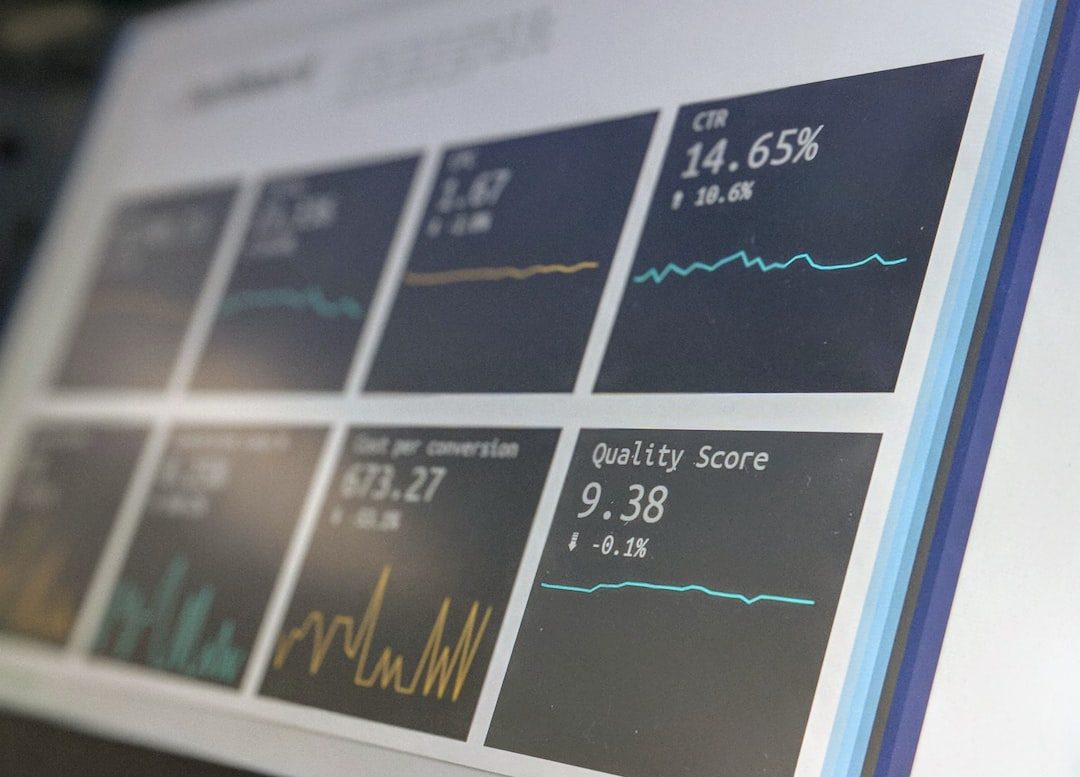
Evaluation also builds organizational trust. Executives approve AI budgets when you show trend lines: faithfulness improving from 0.78 to 0.91 over three sprints, latency stable at 2.1 seconds, user satisfaction scores climbing. An LLM evaluation framework transforms AI from a black box into a managed system with SLAs.
Core Metrics for Your LLM Evaluation Framework
A production LLM evaluation framework tracks metrics at three layers:
Retrieval metrics (for RAG systems)
| Metric | What it measures | Target |
|---|---|---|
| Context precision | Are retrieved chunks relevant to the query? | ≥ 0.80 |
| Context recall | Did retrieval find all necessary information? | ≥ 0.75 |
| Hit rate @k | Is the correct document in the top-k results? | ≥ 0.90 at k=5 |
Generation metrics
| Metric | What it measures | Target |
|---|---|---|
| Faithfulness | Is the answer grounded in retrieved context? | ≥ 0.85 |
| Answer relevance | Does the answer address the question? | ≥ 0.85 |
| Hallucination rate | Fraction of claims not supported by sources | ≤ 0.05 |
End-to-end metrics
| Metric | What it measures | Target |
|---|---|---|
| Task success rate | Did the system accomplish the user’s goal? | Domain-specific |
| Latency (p95) | Response time including retrieval + generation | ≤ 3 seconds |
| Cost per query | Token usage and infrastructure cost | Budget-defined |
For agentic AI workflows, add agent-specific metrics: tool selection accuracy, multi-step completion rate, escalation frequency, and cost per completed workflow.
The LLM evaluation framework should compute all applicable metrics on every eval run and store results with timestamps, git commit hashes, and configuration snapshots — enabling before/after comparisons across changes.
Evaluation Architecture: Offline, Online, and Human-in-the-Loop
A complete LLM evaluation framework operates at three speeds:
Offline evaluation (pre-deployment). Run your eval dataset against the current pipeline configuration. Compare metrics to baseline. Gate merges and releases on threshold checks. This is your primary quality firewall.
Online evaluation (production monitoring). Sample live traffic (5–10% of queries) and score responses asynchronously. Track metric drift over time. Alert when faithfulness or latency crosses thresholds. Tools like LangSmith and Arize Phoenix excel here.
Human-in-the-loop evaluation (calibration). Have domain experts score a random sample of responses weekly. Use human judgments to calibrate automated metrics — an LLM-judge faithfulness score of 0.85 should correlate with human “acceptable” ratings. Without calibration, automated metrics can drift from business reality.
Architecture pattern:
Eval Dataset (JSON/CSV)
    ↓
Offline Eval Runner (Ragas / DeepEval / custom)
    ↓
Metrics Store (MLflow / PostgreSQL / LangSmith)
    ↓
CI/CD Gate (pass/fail thresholds)
    ↓
Production Deployment
    ↓
Online Sampling → Metrics Store → Dashboards + Alerts
For teams with data governance requirements, the metrics store becomes part of your AI audit trail — demonstrating due diligence to regulators and internal risk committees.
Tools and Frameworks in 2026
The LLM evaluation framework tooling landscape matured rapidly. Here are the leading options:
| Tool | Strength | Best for |
|---|---|---|
| Ragas | RAG-specific metrics (faithfulness, context precision) | RAG pipeline teams |
| DeepEval | Pytest-style test cases, 14+ metrics | Engineering teams with CI/CD |
| LangSmith | Tracing + eval + dataset management | LangChain/LangGraph users |
| Phoenix (Arize) | Embeddings analysis + retrieval debugging | Retrieval quality debugging |
| Braintrust | Eval + scoring + production logging | Full-stack eval platform |
Most teams combine an open-source metric library (Ragas or DeepEval) for offline CI gates with a tracing platform (LangSmith or Phoenix) for production observability. The LLM evaluation framework code lives in your repo; the observability platform captures live traces.
Example DeepEval test case:
from deepeval import assert_test
from deepeval.metrics import FaithfulnessMetric
from deepeval.test_case import LLMTestCase

def test_refund_policy_answer():
    test_case = LLMTestCase(
        input="What is the international refund window?",
        actual_output=rag_pipeline.query("What is the international refund window?"),
        retrieval_context=["Section 4.2: International returns accepted within 30 days..."]
    )
    metric = FaithfulnessMetric(threshold=0.85)
    assert_test(test_case, [metric])
Run this in CI on every pull request that touches chunking, embedding models, or prompt templates.
Building Your First Eval Dataset
The quality of your LLM evaluation framework depends entirely on dataset quality. Follow this process:
Step 1: Mine real queries. Export the last 500 user questions from your staging environment, support tickets tagged as “documentation questions”, or Slack messages in #data-help channels. Real queries include the ambiguity and edge cases that synthetic data misses.
Step 2: Label 50–100 pairs. For each query, record: the question, the ideal answer (or answer criteria), the relevant source documents, and whether the question is answerable from your corpus. Two labelers per question; resolve disagreements.
Step 3: Tag difficulty. Classify each query: simple lookup, multi-hop reasoning, ambiguous, unanswerable. Your LLM evaluation framework should report metrics per difficulty tier — a system with 95% accuracy on simple queries but 40% on multi-hop needs different fixes.
Step 4: Include adversarial cases. Add queries designed to trigger failure: questions about topics not in your corpus, requests for fabricated statistics, prompts with misleading premises. Measure how often the system correctly refuses or flags uncertainty.
Step 5: Version and grow. Store datasets in Git (JSON or CSV). Add 10–20 new labeled queries monthly from production sampling. Retire outdated queries when source documents change.
For semantic layer and NL-to-SQL systems, eval datasets should include the expected SQL or metric name — not just the natural-language answer — so you can measure query generation accuracy independently from execution results.

Integrating Evals into CI/CD and Agent Workflows
An LLM evaluation framework delivers value only when it gates deployments. Implementation checklist:
CI pipeline integration. Add an eval step after unit tests: python -m deepeval test tests/eval/. Fail the build if any metric drops below threshold compared to the main branch baseline.
Prompt and config versioning. Store prompts, model names, chunk sizes, and retrieval parameters in Git. Tag eval runs with the exact configuration hash so you can bisect regressions.
Canary deployments. Route 5% of production traffic to the new pipeline version. Compare online metrics against the stable version for 24–48 hours before full rollout.
Agent workflow evals. For multi-step agents, evaluate the full trace: did the agent select the correct tool? Did it handle errors gracefully? Did the final output match success criteria? Log every step and score end-to-end.
Stakeholder dashboards. Publish weekly eval summaries: metric trends, top failure categories, dataset growth. Tie metrics to business outcomes — “faithfulness improvement reduced support escalations by 22%.”
Regression budget. Allow small metric fluctuations (±0.02) to avoid blocking urgent fixes. Require explicit approval for changes that drop any metric by more than 0.05.
FAQ
What is an LLM evaluation framework?
An LLM evaluation framework is a structured system for measuring AI application quality using automated metrics, labeled test datasets, and human review. It covers retrieval accuracy, answer faithfulness, relevance, latency, and task completion — run continuously in CI/CD and production monitoring.
How many test cases do I need to start?
Fifty labeled question-answer pairs from real user queries is the minimum viable LLM evaluation framework dataset. This catches the most common failure modes. Expand to 100–200 pairs within the first month by sampling production traffic. Quality matters more than quantity — 50 well-labeled real queries outperform 500 synthetic ones.
Which metrics matter most for RAG systems?
Prioritize faithfulness (is the answer grounded in retrieved documents?) and context recall (did retrieval find the right sources?). These two metrics catch the majority of user-visible failures. Add answer relevance and latency once faithfulness and recall are above 0.80.
Can I use an LLM to evaluate another LLM?
Yes — LLM-as-judge is standard practice in 2026 LLM evaluation framework implementations. Models like GPT-4o or Claude Sonnet score faithfulness and relevance against rubrics. However, calibrate LLM-judge scores against human ratings monthly. Uncalibrated LLM judges can be gamed by prompt changes that improve scores without improving actual quality.
How does evaluation relate to AI governance?
Evaluation provides the evidence layer for AI governance: documented quality metrics, audit trails of eval runs, and defined release thresholds. Regulators and risk committees increasingly expect demonstrable evaluation practices before approving AI systems in regulated domains.
Ship AI with Confidence
An LLM evaluation framework is the difference between AI demos and AI products. The metrics, datasets, and CI gates described here give your team the confidence to iterate fast without breaking production quality — whether you are optimizing a RAG pipeline, deploying MCP-connected agents, or scaling agentic workflows across the enterprise.
At Datarmatics, we help teams design eval datasets, integrate Ragas and DeepEval into CI/CD, and build production monitoring dashboards. Contact us to discuss your evaluation strategy.
